SocialMaharaj Technology, Travel, Food et al
Related Articles
I’ll be honest – the Shinkansen was on my Japan bucket list long before I even booked the flight. Not in a casual “oh that’d be nice” way. More in a “I have watched every YouTube video, read every travel thread, and mentally sat in that cabin a hundred times” kind of way.
That, I guess, is one of the most common bucket list items for a lot of people travelling to Japan for the first time – the bullet train. Most of us have seen them in videos, read about them in books or heard from others. And hence, everyone I know who’s been to Japan has taken a ride on the bullet train in Japan.
In this blog post, I’ll share my experience on the Shinkansen train from Tokyo to Kyoto and provide you with as much detail as I can!
Quick Facts: Tokyo to Kyoto Shinkansen
| Route | Tokyo → Kyoto |
| Distance | ~450 km (direct), total corridor ~850 km |
| Journey Time | ~2 hours |
| Top Speed Experienced | ~280 km/h |
| One-Way Ticket Cost | ~₹8,500 |
| Round-Trip Cost | ~₹16,000–₹17,000 |
| Booked Via | Official Shinkansen website (booked from India before departure) |
Why I Chose the Tokyo–Kyoto Route for My First Shinkansen Ride
Since this was my first time in Japan, I wasn’t trying to bite off more than I could chew. The Tokyo to Kyoto Shinkansen felt like the right entry point – a well-travelled route, about two hours each way, and it fit perfectly into the itinerary since Kyoto was already on the list. It’s not the longest Shinkansen journey you can take, and I’ll get to why that matters in a moment, but for a first experience, it was the right call.
Booking Shinkansen Tickets From India
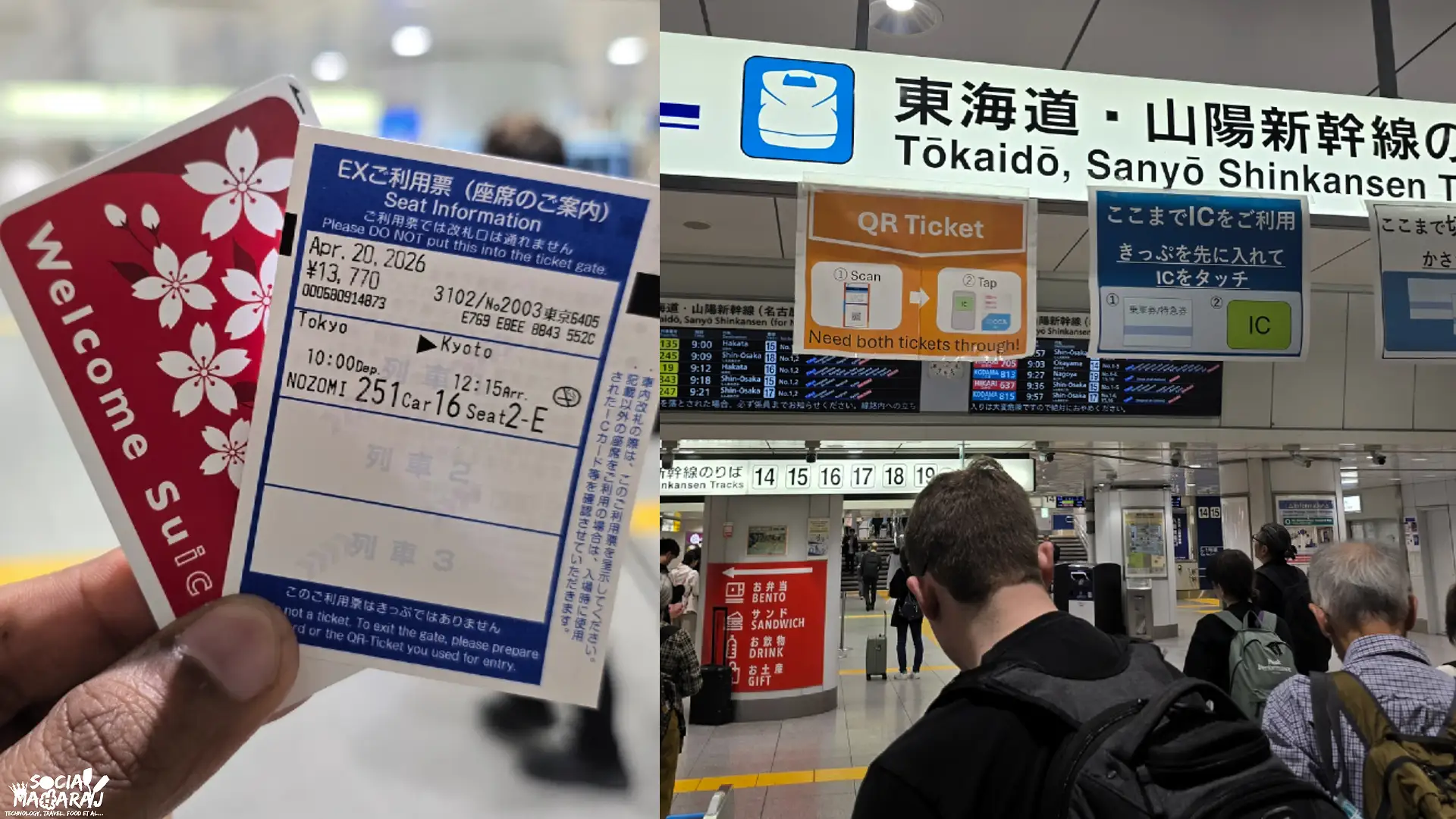
I booked the tickets online through the official website before leaving India, which I’d strongly recommend doing ahead of time rather than scrambling at the station. Here’s what you’ll have to do:
- Register for a new account on the official Shinkansen Website – it’s free.
- Verify your email ID and log in to the site
- Once logged in, search for Trains between the stations, in this case, Tokyo to Kyoto
- Choose the fare, you’ll see SmartEx and Green, choose SmartEx and proceed to reserve your seat (there are 1 or 2 unreserved coaches in the train, but I suggest reserving a seat)
- Choose your seat, Right side from Tokyo to Kyoto for Mt. Fuji views
- Pay the amount on the final screen
- Head to My Trips to find the ticket
- On the day of travel, click on Display QR ticket and scan it at the turnstile
The official video below explains it well
The one-way ticket came to around ₹8,500, and for the round trip, I paid somewhere between ₹16,000 and ₹17,000 in total. Yes, that’s expensive. No, I don’t regret it for a second.
The Platform Experience – This Is Where Japan Gets You
I arrived at Tokyo station way early that I should have. The station is massive and confusing, but they have the official station guide, so you don’t get lost. The platform number is displayed a few minutes before the train arrives. So you’re waiting at the concourse, watching the board, and then it updates, and everyone moves with quiet, efficient purpose. No chaos, no shoving. Just people who know exactly what they’re doing.
What I hadn’t expected was how much would happen on the platform before I even boarded. I got to watch the entire turnaround process – the cleaning crew came in, worked through the train at what I can only describe as synchronised speed, flipped every seat to face the direction of travel, and were out before most passengers had even lined up. Then I noticed the drivers – standing at precise positions on the platform, glancing at their watches, doing final checks. There was something almost ceremonial about it.
If you’ve ever wondered why Japanese trains run to the second, you only need to watch this process once. It’s not an accident. It’s trained, repeated, deliberate precision — and watching it before my first ride made the whole experience mean something more than just “fast train.”
My train departed at 10:10. It left at 10:10.
Inside the Cabin: What the Shinkansen Actually Feels Like
The cabin itself – I’d describe it as a well-executed version of an Executive Shatabdi if you’re looking for an Indian-traveler reference point. Broad, comfortable seats in a 3+2 configuration, a fold-down tray table, a charging socket, and overhead storage for bags. Clean. Functional. No complaints there.
What surprised me was how quiet it was. At close to 280 km/h, the cabin was almost eerily silent – none of the clatter you associate with trains in India. And the ride was remarkably smooth. I kept thinking about this: if I’d placed a glass of water on the tray table, it would have stayed put. That’s the kind of stable, vibration-free experience you’re getting, and it somehow makes the speed feel even more surreal rather than less.
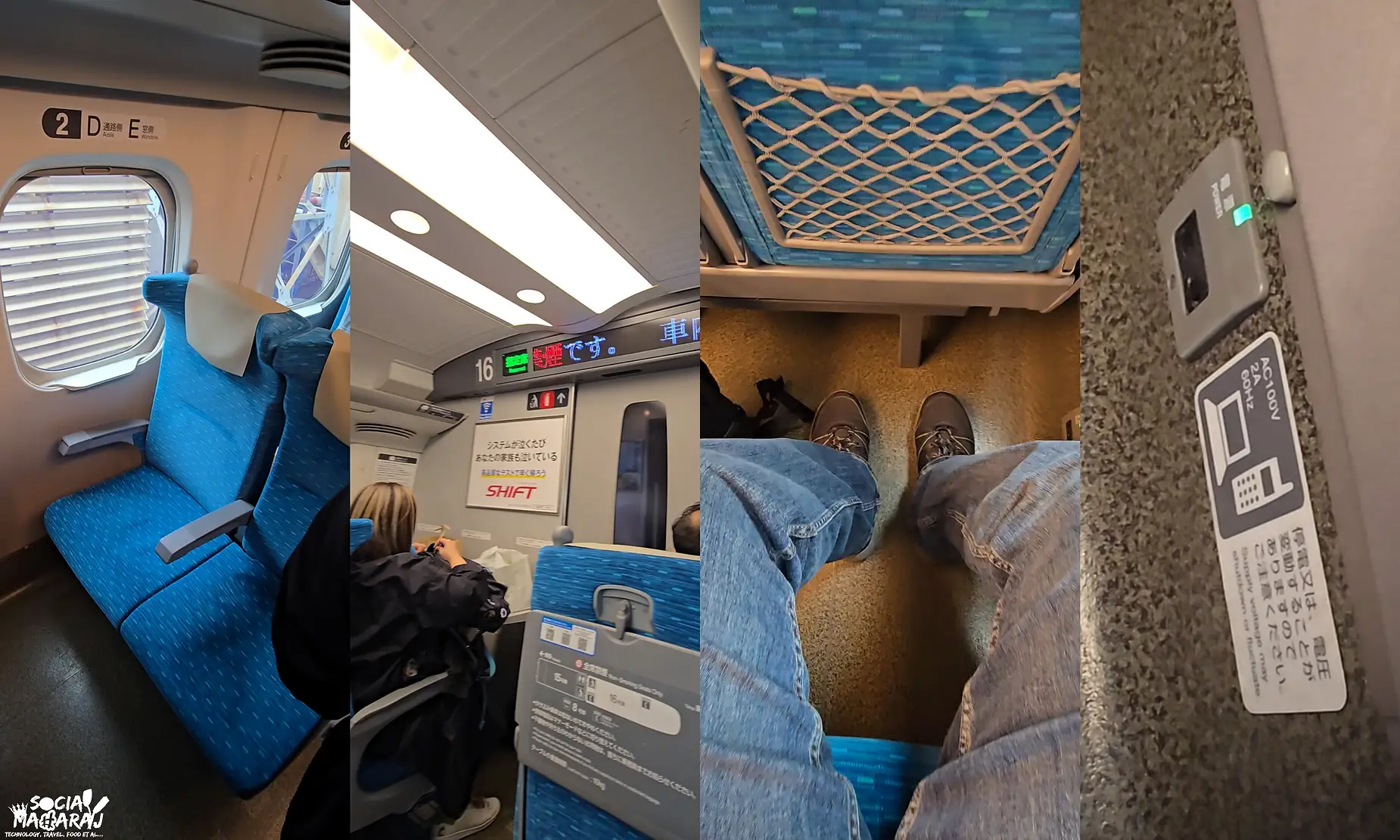
There were regular in-cabin announcements – English included – letting you know the next station and estimated arrival. There’s also FREE Wi-Fi on board, which worked fine for basic browsing (let’s just say it’s not keeping pace with the train, but it does the job).
On Snacks and the Pantry Car
Here’s something I wasn’t fully prepared for: there is no in-seat snack service on the Shinkansen. I believe there’s a pantry car somewhere in the train, but I honestly can’t confirm that from my experience – I didn’t use it. What I’d tell anyone, especially if you’re vegetarian and particular about what you eat: pick up your snacks at the station before you board. Tokyo Station has incredible food options (the basement level is a whole experience on its own), and two hours goes by faster than you’d think.
The Mount Fuji Moment
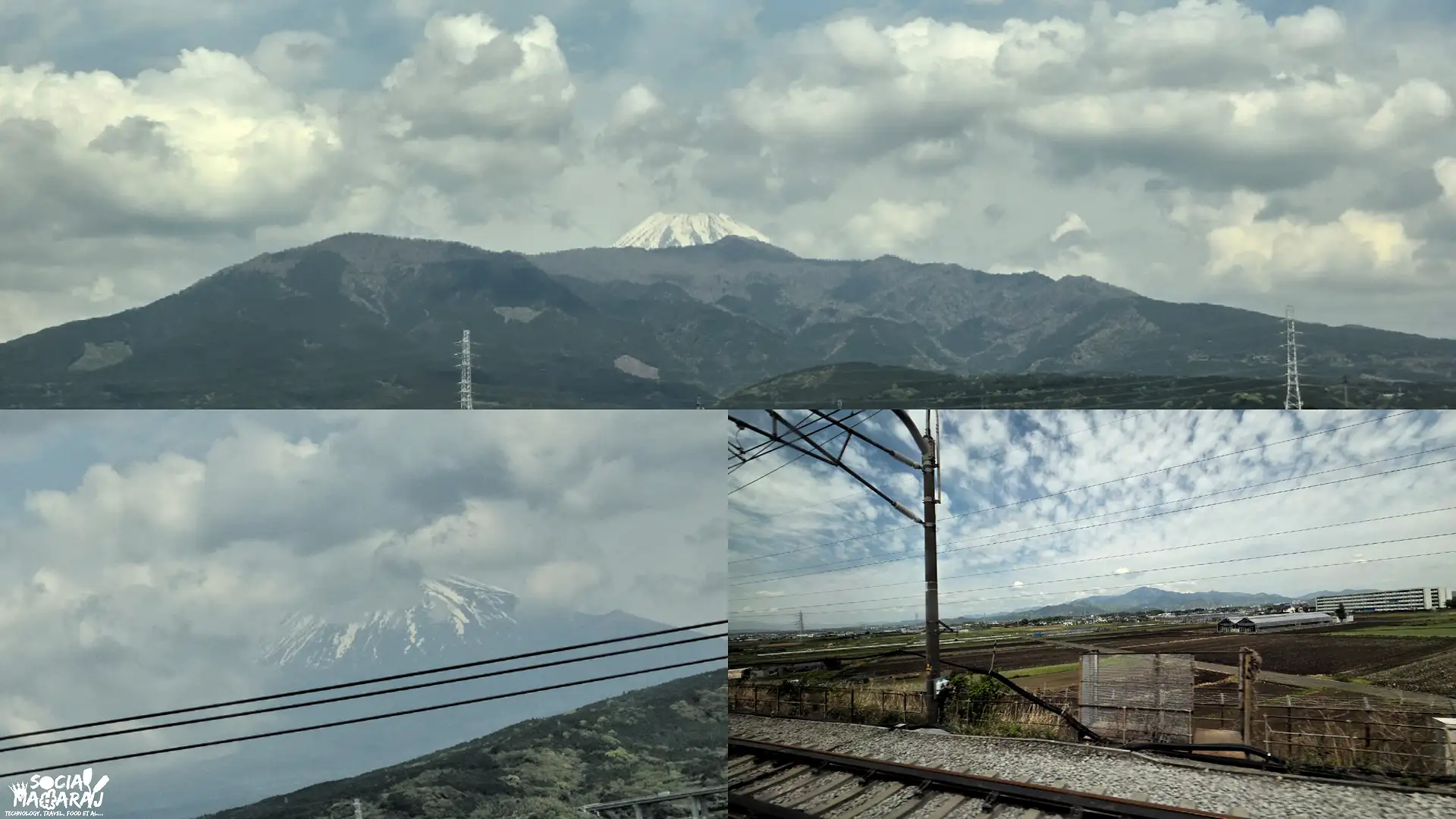
This is practical information I wish someone had told me more clearly before I left: if you’re travelling from Tokyo to Kyoto, sit on the right-hand side of the train to get the view of Mount Fuji. On a clear day, you’ll see it roughly one hour after departing Tokyo – and it goes past quickly, so keep an eye out rather than being buried in your phone at that point.
Weather dependent, obviously. But if the skies cooperate, it’s one of those moments that makes the ticket price feel entirely justified on its own.
How Does It Compare to Other High-Speed Trains?
I’ve had one other high-speed rail experience worth comparing – the Frecciarossa from Milan to Rome in Italy, which hit 301 km/h on that route. The Shinkansen on the Tokyo–Kyoto stretch topped out around 280 km/h for me, so technically it was a touch slower in pure top speed. But this route is on the shorter end of what the Shinkansen network offers – if raw speed is what you’re chasing, a longer route would give you more time at full throttle.
That said, comparing the two experiences purely on speed misses the point. The Shinkansen is as much about the system – the punctuality, the platform choreography, the quiet efficiency – as it is about the km/h. The Italian train is fast. The Shinkansen is fast and feels like it was designed by people who genuinely believe lateness is a moral failing.
Should You Take the Shinkansen? Yes!
Take it if you:
- Are you visiting Japan for the first time and want an experience that’s distinctly, irreducibly Japanese
- Are you travelling between cities like Tokyo, Kyoto, Osaka, or Hiroshima, where it’s genuinely the fastest and most convenient option
- Want to see Mount Fuji from the window (clear weather required — fingers crossed)
- Appreciate precision, punctuality, and the quiet pleasure of things that work exactly as they should
Think twice if you:
- Are travelling on a very tight budget and have flexible time – the overnight buses between cities are dramatically cheaper
- Want a long, immersive rail journey – the Tokyo–Kyoto leg is over before you’ve fully settled in
- Are you expecting an on-board meal service and haven’t prepped your own snacks (sort this out at the station, seriously)
Final Verdict
Worth it. Unambiguously. Not just for the speed – though travelling at 280 km/h in near-silence while a glass of water theoretically stays put on your tray table is its own kind of magic. But for everything around the speed: the platform ritual, the cleaning crew’s choreography, the driver checking his watch, the train leaving at exactly 10:10. That’s the real Shinkansen experience, and no amount of reading about it quite prepares you for seeing it in person.
If you’re going to Japan – and I hope you are – make the Shinkansen a non-negotiable. Even once. Even just one leg of the trip. It’ll tell you more about Japan than a lot of things on the standard tourist checklist.
I’m already turning over what a longer Shinkansen route would feel like on a hypothetical second Japan trip – Kyoto down to Hiroshima, maybe, or further south. But that’s a future Maharaj problem. For now, the 10:10 to Kyoto has a permanent spot in my travel memory.
Have you taken the Shinkansen? Or are you planning a Japan trip and trying to figure out if it’s worth the splurge? Drop your questions in the comments — happy to help you think it through. You can also find me on Instagram where I post the stuff that doesn’t make it into full blog posts.
Frequently Asked Questions
How much does the Shinkansen from Tokyo to Kyoto cost for Indians?
When I booked, the one-way ticket came to around ₹8,500, and the round trip was roughly ₹16,000–₹17,000. Prices can vary depending on the seat class (reserved vs. unreserved, standard vs. Green Car) and exchange rates at the time of booking. I’d recommend booking through the official website before leaving India rather than buying at the station.
How long does the Shinkansen take from Tokyo to Kyoto?
On the Hikari or Nozomi services, it’s roughly 2 to 2.5 hours with limited stops. My train had just two stops before Kyoto. The Kodama service stops more frequently and takes longer – for the Tokyo–Kyoto route, most travellers take the Nozomi or Hikari.
Can I see Mount Fuji from the Shinkansen?
Yes – on the Tokyo to Kyoto journey, sit on the right-hand side and look out about one hour after leaving Tokyo. The view is brief, so don’t get distracted. It’s entirely weather-dependent, so a clear day is essential. If clouds are forecast, temper expectations but still look – sometimes you get lucky.
Is there food available on the Shinkansen?
There’s no trolley service or in-seat meal service on the standard Shinkansen cabins. There may be a pantry car on some services, but I’d strongly suggest picking up food and snacks at the station before boarding – especially if you’re vegetarian and need options you can trust. Tokyo station’s food hall is genuinely impressive and worth arriving early for.
How punctual is the Shinkansen really?
The reputation is real. My train left at exactly 10:10 – not 10:11, not 10:09. The annual average delay across the entire Shinkansen network is measured in seconds, not minutes. Watching the platform process before departure – the cleaning crew, the drivers’ precise checks make it clear this isn’t luck. It’s a system that’s been built and maintained to run that way.
Is the Shinkansen comfortable for a 2-hour journey?
Very much so. The seats are wide and well-padded – comparable to an Executive Shatabdi in India, if that’s a useful frame. There’s a fold-down tray table, a charging point, and overhead storage. The ride itself is remarkably smooth and almost eerily quiet at speed. Two hours go by quickly, and you arrive feeling like you’ve been sitting still rather than hurtling across the country at 280 km/h.
Should I buy a Japan Rail Pass or individual Shinkansen tickets?
This depends entirely on how many Shinkansen journeys you plan to take and over how many days. If you’re doing multiple long-distance rides (Tokyo–Kyoto, Kyoto–Hiroshima, and back), a JR Pass can work out cheaper. For just one or two rides, individual tickets may make more sense. I booked individual tickets for my trip and it worked fine – but run the numbers against your specific itinerary before deciding.