SocialMaharaj Technology, Travel, Food et al
Related Articles
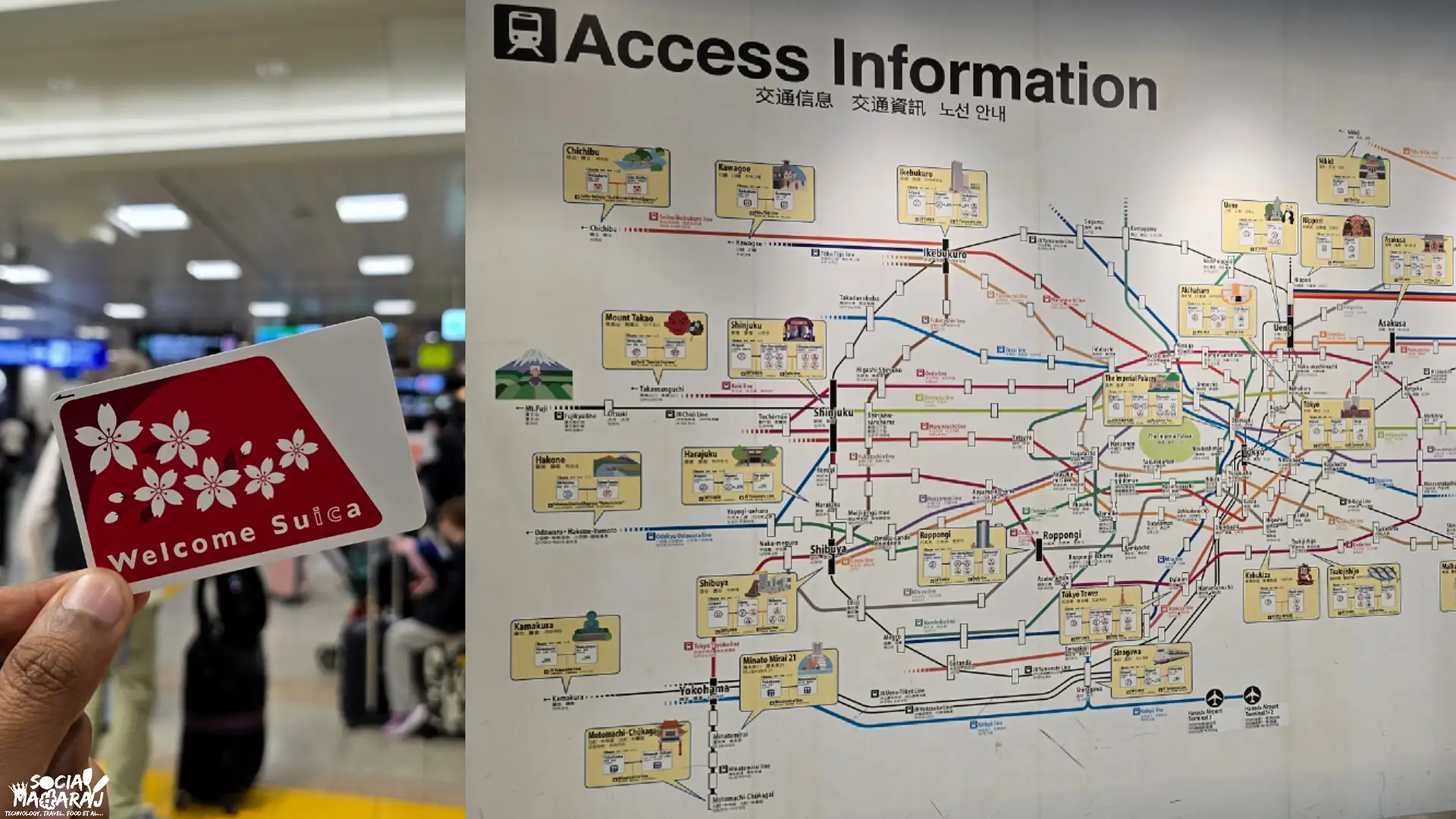
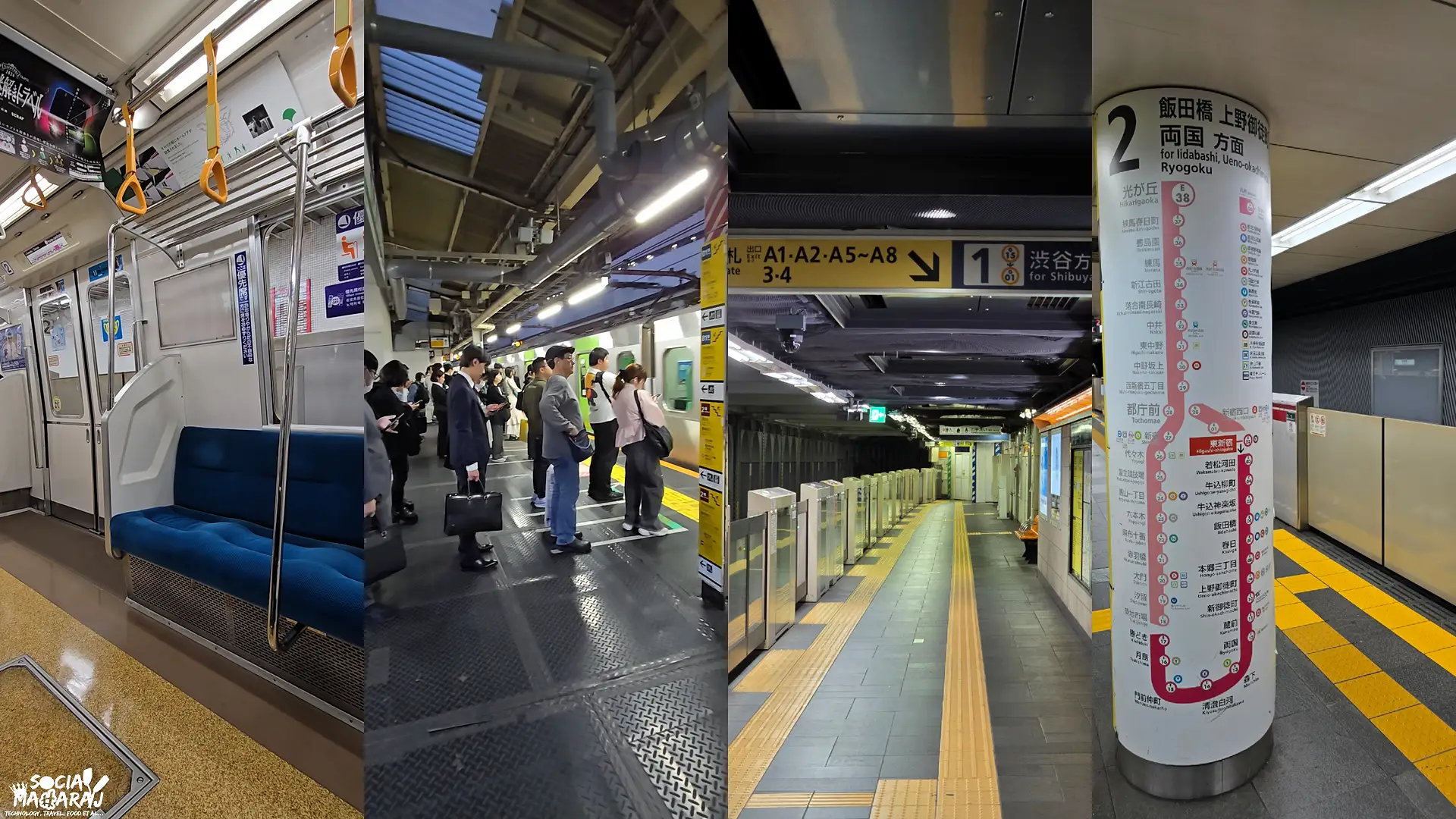
The first time I pulled up the Tokyo metro map on my phone, I genuinely thought someone was pranking me. Fourteen lines. Five different operators. Colour coding that would make a Pantone chart look minimal. I zoomed in. Then zoomed out. Took a screenshot to study later. Then gave up and decided I’d figure it out at the station. It totally reminded me of the New York Subway the first time I landed in the Big Apple a few years ago.
I didn’t need to.
Because two minutes after clearing immigration at Narita, I had a red Suica card in my hand – and for the next ten days across Tokyo, Kyoto and Osaka, transport was simply not a thing I had to think about. Tap in, tap out. That’s literally it.
I’ve done transport guides before. My Mumbai Local guide was the first – and if you’ve survived rush hour at Dadar, you’ll have a very specific picture of the chaos I was bracing for. I’ve also covered the Paris Metro and Chicago Metro. Japan is in a different league in terms of complexity. Here’s the kicker, though: the solution is also in a different league.
This guide covers everything you need to know about the Suica – what to get, where to get it, how to top it up, and what the 2026 changes mean for Indian tourists specifically.
Still putting the trip together? Start with my Japan itinerary post for the full picture.
Why Suica and Not Individual Tickets
You land at Narita, you probably will if you’re travelling on Japan Airlines. You want to get to your hotel in Shinjuku or Shibuya. You walk up to the ticket machine. The fare map above it has dozens of destinations, each priced differently depending on which operator’s train you take. The machine defaults to Japanese. There’s a queue forming behind you. And this is just your first journey out of the airport.
Now multiply that by every single trip across three cities, each with its own train companies running their own networks with their own fares.
That’s the problem Suica solves in one tap. (Also just how pretty it is!)
You load money onto the card, tap in at the gate when you board, and tap out when you exit. The fare is calculated automatically, regardless of which operator’s line you’re on. JR East, Tokyo Metro, Osaka Metro, Kyoto city buses – it doesn’t matter. You don’t need to know which company runs which line. You just tap and walk through.
Get the Suica first. Everything else in Japan can wait.
Suica, Welcome Suica and PASMO: What’s the Difference
Here’s where most guides write three paragraphs and leave you more confused than when you started. Let me keep this practical.
Welcome Suica (the red card – what I got)
This is what I’d recommend for most Indian tourists on a first trip. No deposit, no ID, no fuss. Available at the airport right after immigration.
A few things to know upfront:
- Valid for 28 days from your first tap – the clock starts when you first use it, not when you buy it
- No deposit – every yen you load is usable as a balance
- Balance is non-refundable – spend it before you leave or it’s gone, so top up in smaller amounts. I came back with ¥200 left on the card 🙁
- One card per person maximum
- The red and white sakura design uses the Japanese flag colours – red for the sun, white for cherry blossoms. Worth keeping as a souvenir.
Regular Suica (the green card)
Quick note because a lot of people still have outdated information on this: Regular Suica cards were suspended from mid-2023 due to a global IC chip shortage that ran for nearly two years. Sales fully resumed in March 2025. They’re back, available at JR East ticket machines at major stations.
The green card makes more sense if you visit Japan more than once, or if you’re staying longer than 28 days:
- Requires a ¥500 refundable deposit
- Valid for 10 years from last use
- Balance refundable at JR East stations (minus a ¥220 handling fee)
PASMO and PASMO Passport
PASMO is issued by non-JR Tokyo operators. Functionally identical to Suica and fully interoperable – it works everywhere Suica works. The tourist version is the PASMO Passport, with the same 28-day structure, also available at airports.
Honestly? For a first-time tourist, Welcome Suica and PASMO Passport are the same thing in different colours. Pick whichever line at the airport looks shorter.
What About the Suica App?
JR East launched the Welcome Suica Mobile app in March 2025 – built specifically for foreign visitors, entirely in English. But it works only on iPhone 🙁 Since I had an Android, I had to purchase the Suica card.
- Valid for 180 days instead of 28 – genuinely useful if you’re visiting Japan twice in the same year
- Top up by credit card, no cash required
- Download and set up before you board your flight
Non-Japanese Android users cannot use it. The standard Mobile Suica app for Android only works on phones sold in Japan (it requires a FeliCa/Osaifu-Keitai chip that overseas Android phones don’t have). So for Android users like me, the physical card is the only option. Which is fine – it works perfectly.
Getting Your Card and Topping It Up
At the Airport
Landing at Narita? The Welcome Suica vending machines are in the arrivals area right after you clear immigration. Switch the screen to English (top corner of the display), choose your starting load amount, pay cash. Two minutes, done.
One thing I didn’t know beforehand: when you buy, you’ll receive a Reference Paper along with the card. It shows your validity dates and key details that aren’t printed on the card itself. Keep it in your wallet — station staff can occasionally ask for it, and it’s useful to have when you’re checking whether the card is still active on a longer trip.
At Haneda, machines are in Terminal 3’s arrivals hall. Same process.
If you miss the airport for some reason, Welcome Suica is also available at JR East Travel Service Centres at Tokyo, Shinjuku, Shibuya, Ueno and Ikebukuro stations.
Topping Up
This was the one friction point across my entire trip, so I’ll be honest about it.
The physical Welcome Suica tops up with cash only. At any green or black vending machine at any railway station – select “Charge / Add Money”, insert ¥1,000 notes, done. You can also top up at 7-Eleven, FamilyMart and Lawson at the IC card reader near the till, which I found much more convenient when I was already at a metro station.
I loaded ¥3,000 to ¥5,000 at a time. For a week covering Tokyo, Kyoto and Osaka, budget roughly ¥10,000 to ¥15,000 total for local transport. As I wrote in my Japan itinerary post, always carry cash in Japan – topping up your Suica is exactly one of the reasons why.
Quick answers to the questions I had before the trip
Can I top up with a credit or debit card?
No. Cash only for the physical Welcome Suica.
Can I get my remaining balance back at the end of the trip?
No. Welcome Suica balance is completely non-refundable, before or after expiry. There’s no deposit to recover either. Spend what’s left at a convenience store or vending machine before you fly out.
What if I lose the card? Balance is gone. No recovery for Welcome Suica. One more reason to load smaller amounts at a time rather than topping up ¥5,000 all at once.
Can I Just Tap My Credit Card? (2026 Update)
Short answer: yes, on many lines. But there’s a catch that matters a lot.
As of March 25, 2026, contactless credit and debit cards work across 729 stations on 54 lines operated by 11 private rail and subway networks in the greater Tokyo area – including Tokyo Metro, Toei Subway, Tokyu, Keio, Odakyu, Seibu, Tobu and others. Tap at entry, tap the same card at exit, and the fare is charged directly to your card. No top-up, no ticket machine.
All major card brands are covered: Visa, Mastercard, JCB, American Express, Discover, Diners and UnionPay. There were compatibility concerns about Mastercard during the earlier pilot phase, but the full March 2026 rollout covers all brands equally. I was using my Scapia credit card all along the trip, and it was smooth.
Here’s the big caveat: JR East lines are not included. That means the Yamanote Line (the circular loop connecting most of central Tokyo – also my favourite and most used to line), the Chuo Line, the Sobu Line and several others are off the table for contactless credit card payment. These are lines you will almost certainly use as a tourist. So if your journey touches JR East at any point, you still need a Suica.
A couple of other things worth knowing:
- Use the same card for both entry and exit – tapping in on your physical card and out on Apple Pay (even if it’s the same account) causes a fare error
- Doesn’t work on buses, in convenience stores or vending machines
- No child fares are available on this system
My honest take: get the Welcome Suica regardless. The whole point of Suica is that you never have to think about which operator runs which line or which gates support which card. Use the contactless credit card as a backup when your Suica runs low. Don’t make it your primary strategy on a first trip.
JR Pass: Do You Actually Need It?
When you’re planning your trip to Japan and looking at travel passes/cards, you’ll obviously come across multiple travel card options like JR Pass, Suica, etc. So, do you need a Suica or JR Pass?
The JR Pass makes financial sense when you’re doing multiple Shinkansen journeys between cities. My trip was Tokyo to Kyoto to Osaka, but I was mostly staying within each city once I arrived. Running the numbers on my specific itinerary, the pass simply didn’t break even.
One important thing: Suica cannot be used for Shinkansen (bullet trains), the Narita Express (N’EX) or the Keisei Skyliner to Narita. Those need separate tickets every time. For everything local – metro, suburban trains, city buses – Suica covers you completely.
A rough rule of thumb for Indian tourists: one or two cities with local exploration, skip the JR Pass. Four or more cities in ten days with Shinkansen connections between them, do the actual maths on your route – it might pay off.
One Nation, One Card
Here’s what genuinely got me about Japan’s transit system.
As Indians, we know what it feels like when a payment system just works everywhere. UPI does that for money – you don’t think about which bank the merchant uses or which app they’ve got. You scan and pay. Japan’s IC card network has exactly that feeling, but for getting around.
I picked up the Welcome Suica at Narita on day one. That same card got me through Tokyo’s metro for ten days, Osaka’s local lines, Kyoto’s city buses (tap the reader as you exit the bus, not on entry — took me one confused moment at a stop to figure that out), and the highway bus from Ginza back to Narita on my last day. One card. The whole trip. Never changed, never bought a zone pass, never stood confused at a machine.
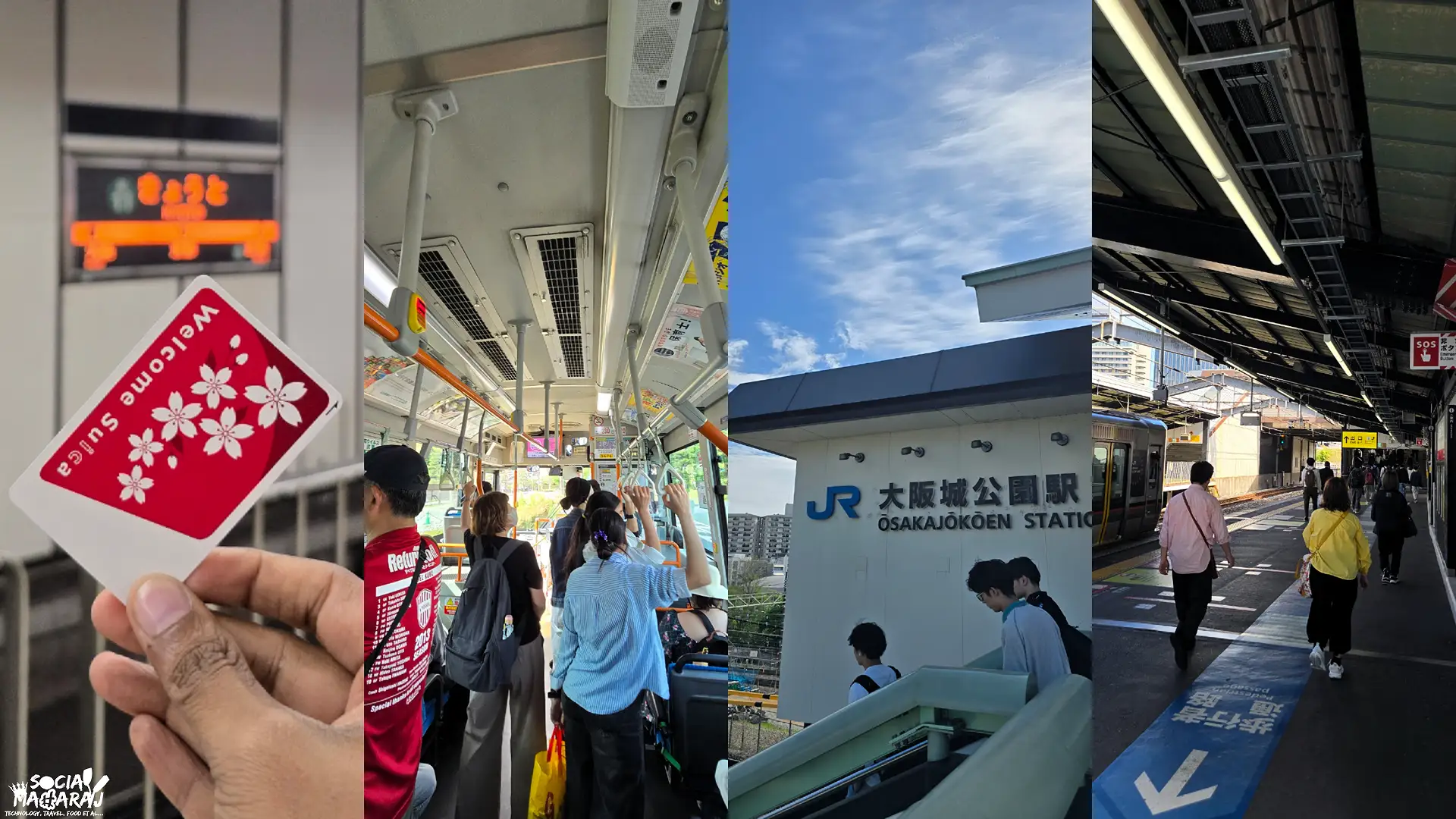
That’s remarkable for a country with arguably the world’s most complex rail network – dozens of operators, hundreds of lines, multiple cities. And it works across Tokyo, Osaka, Kyoto, Fukuoka, Sapporo and most major cities in Japan. No new card is needed as you travel between them.
Things to Know Before Your First Tap
Where Suica Works Beyond Trains
- Convenience stores: 7-Eleven, FamilyMart and Lawson all accept it. Look for the IC logo at the counter.
- Vending machines: most machines at stations and in public spaces take Suica
- Airport buses: confirmed personally – tapped my Suica on the highway bus from Ginza to Narita, worked without any issue
- Some taxis in Tokyo have IC card readers
Where It Won’t Work
- Shinkansen (bullet trains) – a separate ticket is required, but you’ll need this card to tap and enter the station
- Narita Express (N’EX) – separate ticket
- Keisei Skyliner to Narita – separate ticket
- Some scenic tourist trains – the Sagano Romantic Train in Arashiyama, for example, need a station counter ticket
Train Etiquette: The Guidebooks Skip
Japan’s trains are quiet in a way that takes a bit of adjustment after Mumbai or Delhi. A few things that actually matter:
- Phones on silent – ideally no calls at all on local trains
- No eating or drinking on city trains. Shinkansen is the exception.
- Escalators: stand on the left in Tokyo, right in Osaka – yes, it genuinely switches between cities. I learned this the entertaining way in Osaka 😅
- Trains stop around midnight. There are no 24-hour trains in Tokyo, so plan your evenings accordingly.
A Few Last Card Tips
- If you tap out at a gate and it beeps without opening, your balance is too low. Don’t panic – there’s a fare adjustment machine just inside the gates before you exit. Top up there, then walk through normally.
- You can also top up at vending machines on the platform without leaving the station first.
- Keep your Suica in a separate pocket from other IC cards. Two cards too close together can cause a tap error at the gate.
The Honest Verdict
Get the Welcome Suica. Get it the moment you land. Load ¥5,000, tap your way out of Narita, and figure out the rest of the trip as you go.
It is, genuinely, the best thing about travelling in Japan from a logistics standpoint. No other country I’ve visited has made public transit this frictionless for a foreign visitor – and I’ve covered quite a few cities at this point.
More Japan posts are coming – a vegetarian food guide, a deeper look at Tokyo, and Kyoto highlights. If you haven’t read the full Japan itinerary yet, that’s the place to start for the bigger picture. You can also find my Japan trip archives across all the city stops on my Instagram highlights at @Atulmaharaj.
Got questions about the Suica, Tokyo transit or Japan in general? Drop them in the comments – happy to help. And if you’ve visited recently and something has changed since my April 2026 trip, I’d genuinely like to know. Find me on Twitter and Instagram at @Atulmaharaj.