SocialMaharaj Technology, Travel, Food et al
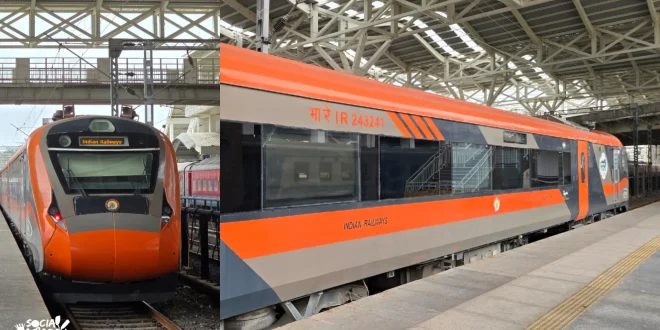
Related Articles
I have been on trains in Switzerland, the Netherlands, France (the TGV), Japan (Shinkansen) and Italy (the Frecciarossa). But the last time I was on a train in India was sometime before COVID – which means it had been a long, long time.
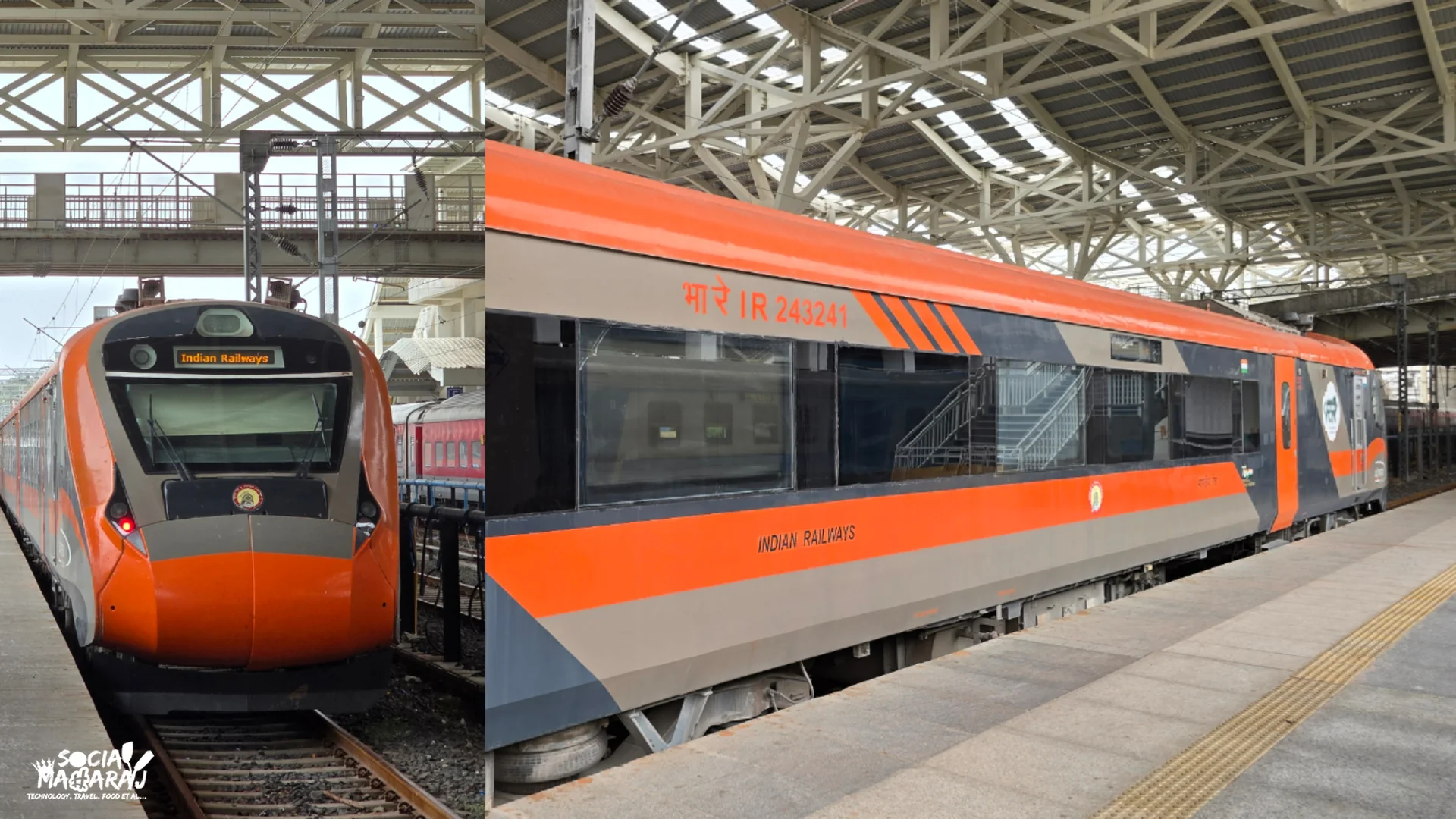
So when I got on the Ahmedabad Jodhpur Vande Bharat on a recent trip, I figured it was finally time to see what all the Vande Bharat fuss was about. Everyone I knew had an opinion on it. Now I have one too.
Vande Bharat Train Review: The Coach and Cabin Feel
I arrived at the Sabarmati station quite early, but the train was already there. However, it wasn’t open to entry, so I was roaming around the platform for quite a bit. The station itself is under renovation, so it’s not really up to the mark.
Talking about the Vande Bharat train itself, it starts right at the door, and honestly, the door alone was a small moment of pleasant surprise. Push-button entry, exactly like you’d find on a European intercity train. Small thing, but it sets a tone.
Inside, the overhead storage is generous. Though I did watch a large family wrestle with truly massive luggage for a good five minutes trying to figure out where it all goes – so there’s still a gap between the space available and the luggage we travel with as a country. The seats themselves are plush and comfortable, and every seat had a charging port that actually worked (not always a given, anywhere).
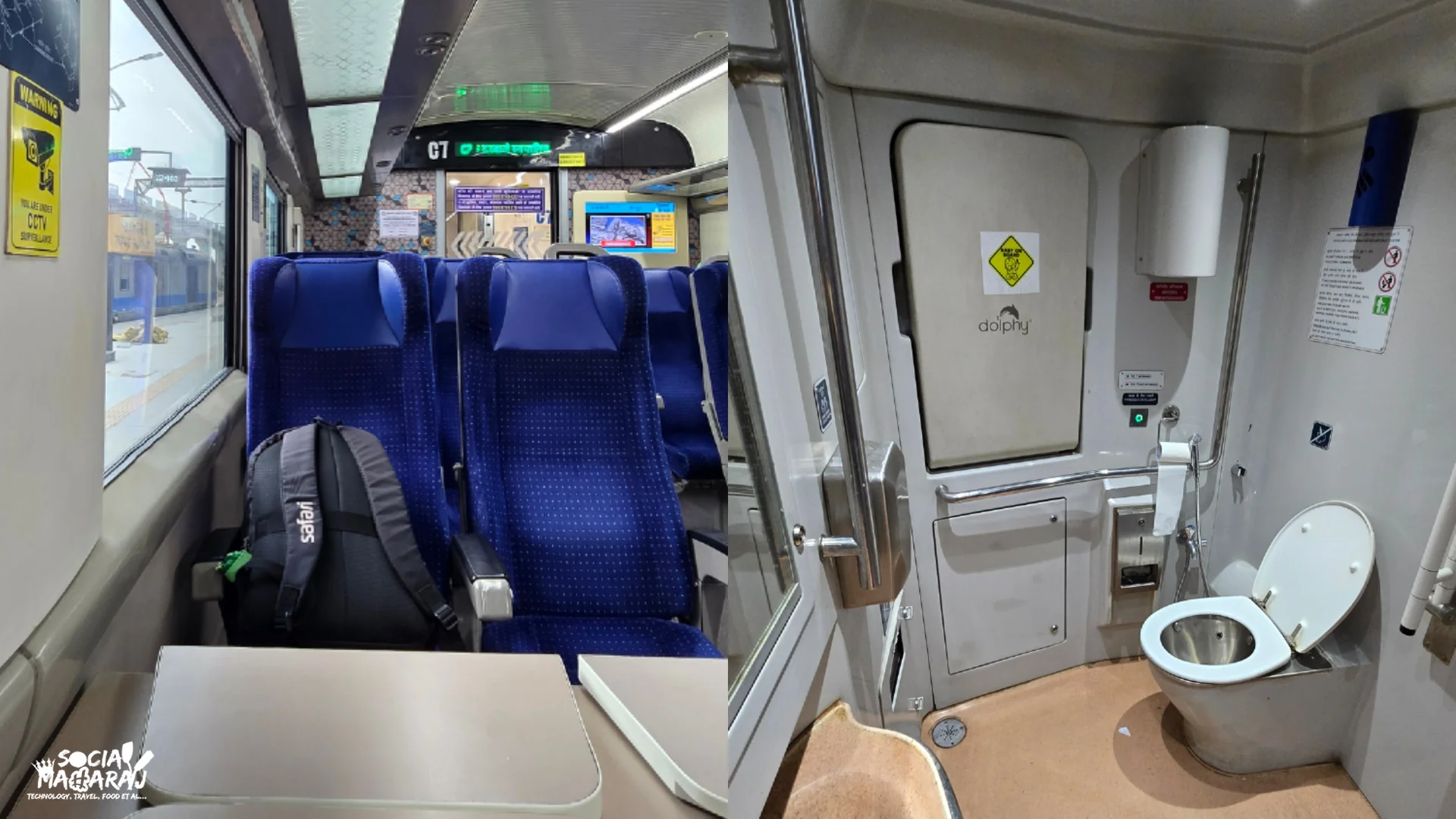
My minor bit of bad luck: I got a seat facing another passenger across a shared table. The table itself was spacious, so it wasn’t the worst outcome, but if you have strong feelings about forward-facing travel, try to pick accordingly when booking.
The bathrooms are a genuine upgrade from what I remembered. Cleaner, more space, functional. The display board cycling through current speed, next station, and route info was a nice touch; I kept checking it more than I needed to, if I’m honest.
Food on Vande Bharat: Is it good?
When you book a Vande Bharat ticket, the fare breakup includes ₹300 towards food and catering. You can opt out if you’d rather not – but honestly, ₹300 for a full meal on a train felt extremely affordable before I’d even tasted a thing. There’s also an in-train trolley service selling packaged snacks, beverages, and the like if you want anything beyond the included meal.
Supper
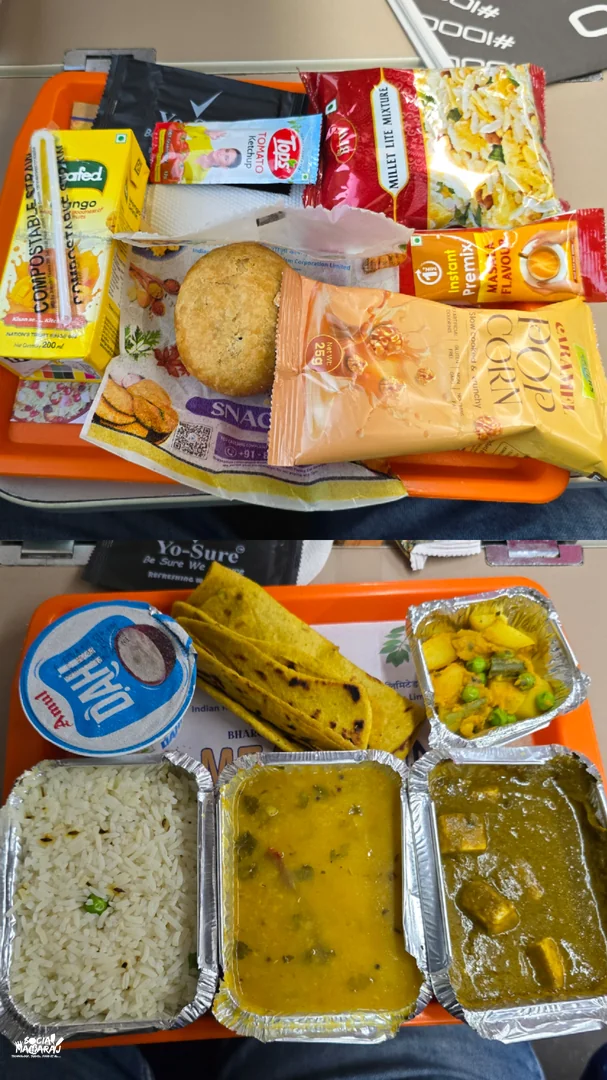
Service started with a supper spread: a premix chai, caramel popcorn, a puffed rice snack, a dal kachori, and a small fruit juice. The kachori was average – edible but nothing to write home about. The chai hit the spot.
Dinner
Dinner was a proper vegetarian spread: aloo subzi, methi roti, rice, dal, palak paneer, and ice cream to close. Decent. Not great, not bad – the kind of meal you’d describe as “it did the job”, which for train food at this price point is actually a reasonable result. I’ve paid more for worse at airports.
One thing I’d skip next time: the wireless infotainment. The interface existed, technically. But the library was genuinely bleak – a handful of films, some of which looked like they predated colour cinema (only a slight exaggeration). If you’re planning a six-hour ride, bring your own entertainment.
Vande Bharat vs Shinkansen vs TGV vs Frecciarossa
The Vande Bharat topped out at 125 kmph on the Ahmedabad–Jodhpur leg. That’s fast by Indian rail standards – faster than anything I’d been on here since maybe the Shatabdi between Delhi and Lucknow or an old-school Rajdhani. So credit where it’s due.
But since I’m the person who just spent a paragraph name-dropping European trains, I’ll be straight with you: the Frecciarossa hit 301 kmph on the Milan–Rome run, and the Shinkansen touched 285 kmph on my Tokyo–Kyoto leg. Those are different categories of engineering entirely, and pretending otherwise helps nobody.
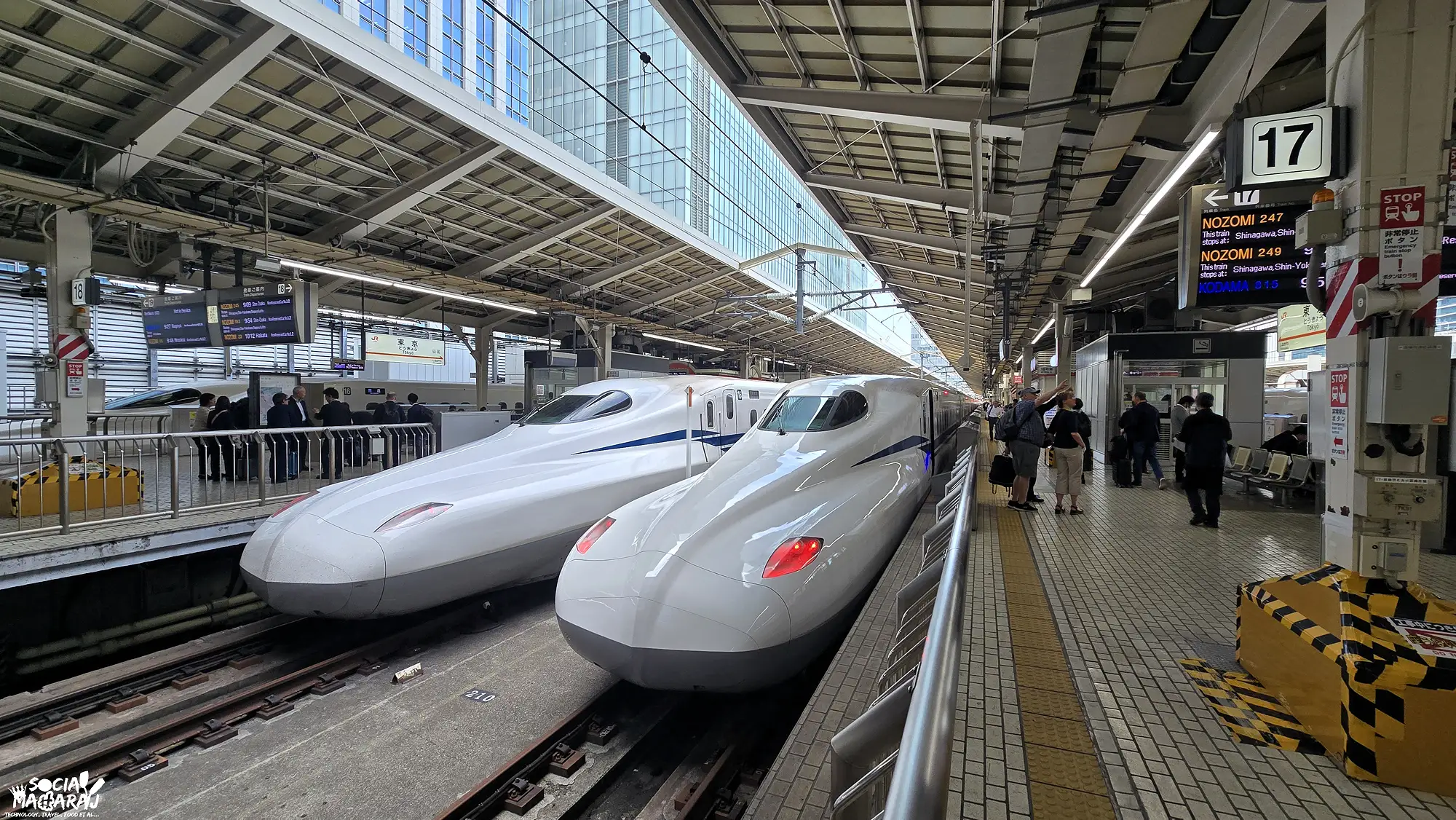
More than speed, what I noticed was the ride quality – the smoothness, the noise, the little jerks and vibrations. Swiss trains in particular are on another level. You genuinely feel nothing. You’ve probably seen those videos of a glass of water on the Shinkansen, sitting completely still at full speed. We’re not there yet.
You feel the track on the Vande Bharat, and the horn – I was in the first coach, so I got the full experience of it – is used very liberally. I understand why: people on tracks leave no other option. But it does add up over six hours. Also, the noise levels are nowhere close to the world-class trains; the cabin is fairly noisy.
None of this is a knock on how far Indian rail has come. It’s just honest context. The gap exists, and the first step to closing it is acknowledging it.
The One Thing Better Engineering Can’t Fix
There was a large religious group in my coach. After a brief seat-sorting scramble at the start, they settled in – and then the entire coach became a travelling bhajan mandali. Loud music, group singing, the works. For the record, I have nothing against bhajans. I have something against being unable to hear my own thoughts for an extended stretch of a journey I paid for.
And when people got off, they left bottles, tissues, and wrappers on the table. Just left them there. The train itself is a real step forward in infrastructure. But infrastructure can only do so much – the last mile of any shared public space is always the people in it. That part, I think, will take time. We’ll get there.
Final Verdict
The Ahmedabad to Jodhpur Vande Bharat was a genuinely enjoyable six-ish hours after a long gap from Indian rail travel. The coach is comfortable, the seats are good, the food is decent for ₹300, and – this matters more than people say – the train left on time and arrived on time. That alone puts it ahead of a lot of alternatives.
Is it a Shinkansen? No. Is it a Swiss train? Not even close. Is it a meaningful step forward for Indian rail and a genuinely pleasant way to travel between cities? Absolutely yes. I came away impressed at how far things have moved – and also quietly hopeful that the civic sense catches up to the engineering eventually. It will, if you’ve been on the Vande Bharat recently and had a different experience – better, worse, or just weirder – I’d genuinely like to hear about it.
Drop a comment below or find me on Instagram @Atulmaharaj; @Atulmaharaj on Twitter – travel conversations there are always good.
Vande Bharat FAQ
Is food included in the Vande Bharat ticket price?
Yes, the Vande Bharat fare includes a catering charge – on my Ahmedabad–Jodhpur journey, it was ₹300 – which covers a supper snack and a full dinner. You can opt out of the meal during booking if you’d prefer not to pay for it. The food is decent for the price, not restaurant quality, but a solid value.
Is Vande Bharat good for vegetarians?
Yes, the included meal on the Ahmedabad–Jodhpur Vande Bharat was entirely vegetarian – dal kachori, chai, and puffed rice snacks for supper, and aloo subzi, methi roti, palak paneer, rice, dal, and ice cream for dinner. There were no non-vegetarian options pushed on me, so vegetarian travellers should be comfortable.
What is the maximum speed of the Vande Bharat train?
On the Ahmedabad–Jodhpur route, the Vande Bharat clocked a maximum of 125 kmph, which is among the fastest for Indian intercity rail. For context, that’s quicker than the old Shatabdi and Rajdhani services but well below high-speed trains in Europe and Japan, which run between 280–300+ kmph.
How is the Vande Bharat seating and comfort?
The seats are plush and comfortable, with charging ports at every seat that were fully functional on my journey. The overhead luggage space is generous, and the bathrooms are a big improvement over older Indian rail stock – cleaner and more spacious. I’d recommend trying to avoid the first coach if horn noise bothers you.
Does Vande Bharat have onboard entertainment?
There’s a wireless infotainment system, but I’d set expectations low – the content library on my journey was very thin, with maybe 8–10 movies, some of which were quite old. I’d strongly recommend downloading your own content or bringing headphones with a playlist before boarding.
Is the Vande Bharat train worth it compared to flying?
For routes in the 4–7 hour range like Ahmedabad to Jodhpur, the Vande Bharat is a genuinely comfortable and affordable alternative to flying. You skip the airport hassle, the included meal is decent, and on my journey, the train left and arrived on time. If you don’t mind a few hours on a train, it’s worth it.
How does Vande Bharat compare to European high-speed trains?
Vande Bharat is a real step forward for Indian rail, but it’s a different category from European or Japanese high-speed trains. The FRECCIAROSSA in Italy hit 301 kmph and Swiss trains offer a noticeably smoother, quieter ride. Vande Bharat at 125 kmph is fast by Indian standards – just not fast in the global high-speed sense, and the ride quality has more vibration and noise than its European counterparts.
What are the most popular Vande Bharat Express routes in India?
Vande Bharat now runs on roughly 82 routes across the country, but a handful see the heaviest demand: New Delhi–Varanasi, New Delhi–Katra (for Mata Vaishno Devi pilgrims), Mumbai–Ahmedabad, Chennai–Bengaluru, Howrah–New Jalpaiguri, and Mumbai–Shirdi. Chennai–Bengaluru is the busiest route in South India, covering the distance in about 3.5 hours, while Delhi–Dehradun is a favourite for weekend hill getaways.